
Journal
The Thread
The closing chapter ties cello, code, India, East Africa, protest, Afro-Raga, and the Harmonic Sitar into one recurring motion: building what does not yet exist.
The Thread
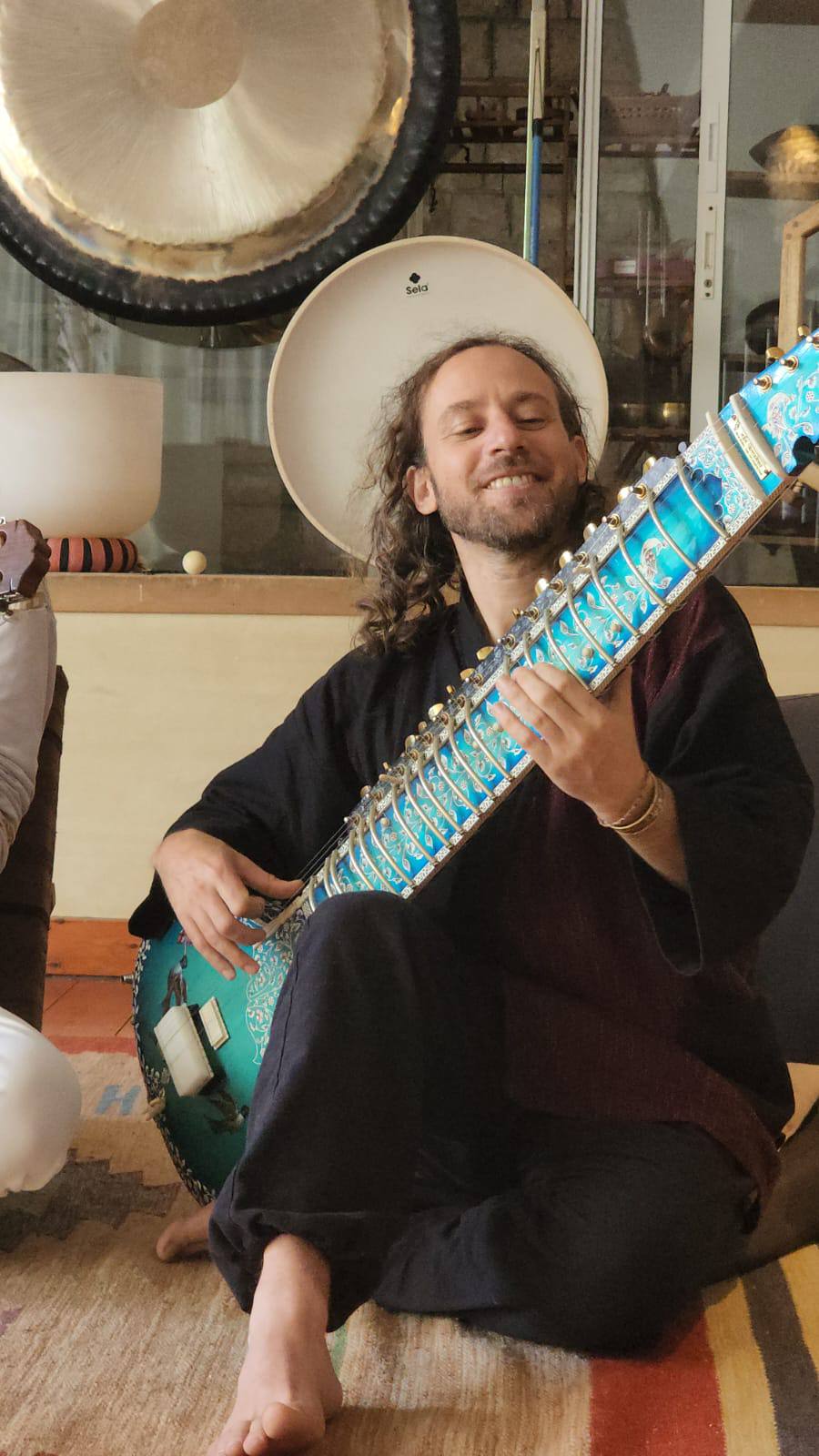
Looking back, the thread is obvious, even if I could not see it while I was living it.
At nine, a cello. At fourteen, a guitar and a line of code. At twenty-one, a sitar class in Dharamsala that changed everything. At twenty-five, dancing with the Samburu at Lake Turkana while they made music from nothing but their voices. At twenty-seven, a guitar that held off the authorities for an hour at Levinsky Garden, and a reggae singer who told me that music was more powerful than violence. A tent camp that became a Supreme Court precedent. An Arab ensemble that led to Ottoman Sufi music that led to Indian raga that led to West African kora that led to a genre that did not exist until I named it. A lockdown in India that produced a song about freedom. An engineer who became a musician who realized he needed to become an engineer again to build the instrument he heard in his head.
Every chapter began the same way: something was broken, or limited, or did not exist yet. And every chapter ended the same way: I built something.
The Harmonic Sitar is not finished. The components are stuck. The war has paused everything.
So I am building for the day after. This website. This story. The infrastructure for what comes next.
But the EP is ready. Four tracks. Four worlds. And when the time is right, you will hear what happens when a mathematician picks up a sitar and refuses to accept its limitations.